





A Night in Ginza
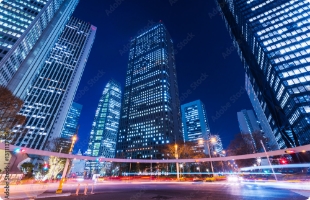
Ginza is the opposite of Roppongi. There, eleven places on the list are still serving at 1:00 and eight at 3:00. Here, nine of the sixteen have shut their doors by 22:00, and after 2:00 there is nothing on this list open at all.
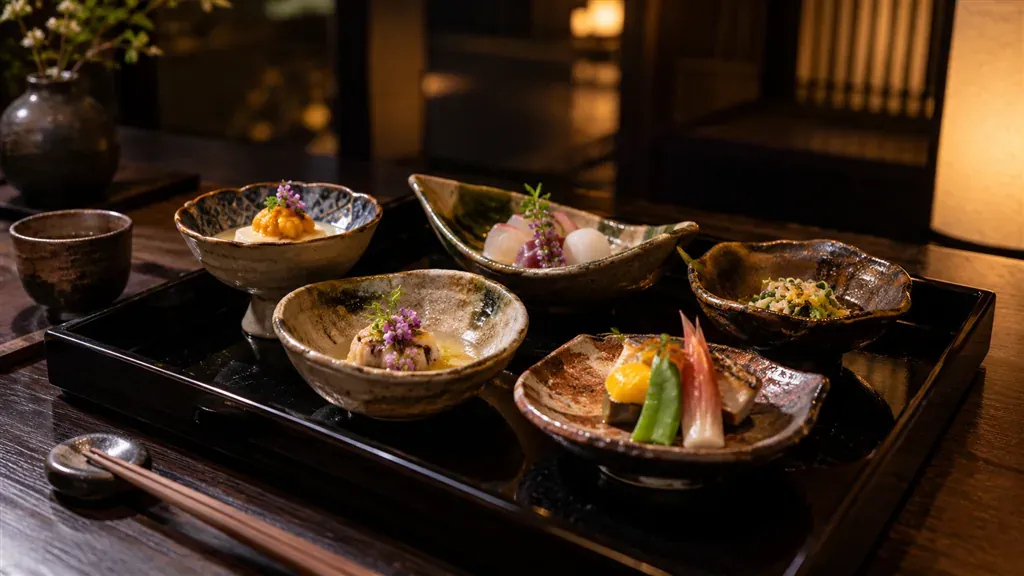
That makes the evening a different shape. In Roppongi the decision comes at around 1:00, when you choose between the last train and the rest of the night. In Ginza the decision comes before you leave the hotel, because dinner is the evening and the dinner you pick has to be booked. This page is written in that order.
One rule applies across the whole area first. Ginza is in Chuo ward, and under the ward's passive-smoking ordinance, in force since 1 July 2020, you may not smoke in a public place — any road, park or plaza in the ward — except at a designated smoking place. Heated tobacco is covered, the ward states so plainly. A separate ordinance from 2004 bans smoking while walking and dropping butts anywhere in the ward. There is no fine under either: patrol officers walk the ward daily and give guidance, and the ward may publish the name of anyone who ignores a formal instruction. The list of places where you can smoke is published by the ward.
Before anything else — which night you come
No other area in this guide changes as much from day to day. Several of the best-known places take the same day off every week, and they are not the same day.
- Monday — Kyubey, Shiseido Parlour and Bar S are all closed. Kyubey is closed on Mondays even when the Monday is a public holiday.
- Wednesday — Ginza Aster is closed, except when the Wednesday is a public holiday.
- Sunday — Kyubey, Tenkuni, Bar S and Bar High Five are all closed, and Ginza Aster stops half an hour earlier than usual. Bar S and High Five are also closed on public holidays.
What takes no weekly day off is a shorter list than you would expect: Ten-ichi and Ushigoro, both open every day of the year; Hageten, Tendon Ramen Hageten and Bairin, which close only on 1 January; Torigin, which closes over the New Year; and Kushikatsu Tanaka and both branches of 300BAR, which serve seven days a week.
17:00 — the cheap hour, if you want one
Ginza has a reputation for being expensive, and the dinners below mostly earn it. The hour before dinner is where that is not true.
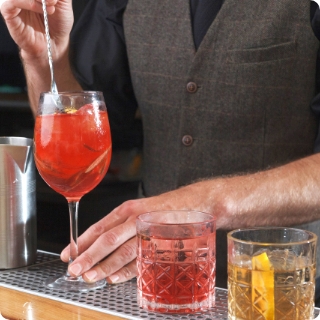
- 300BAR 5-chome — a standing bar in a basement two minutes from Exit A3, open from 16:30, which opened in 1992 as what it calls Japan's first standing bar. There is no table charge: you buy tickets at the door, at least three per person, each ¥330 including tax. Until 19:00 a list of classic cocktails — White Lady, Gin Fizz, Margarita, Side Car and others — costs one ticket instead of two, so a drink is ¥330. The 8-chome branch runs the same system with DJ nights and one cocktail served nowhere else.
- Bar S — the bar on the eleventh floor of the Shiseido building opens at 15:00, and from then until 18:00 it pours an aperitivo list: non-alcoholic cocktails and a highball at ¥1,000, champagne by the glass at ¥1,500, a plate of ham, cheese, olives and dried fruit at ¥1,200. A ¥1,000 cover charge applies at any hour, and no one under 20 may use the bar.
18:30 — dinner is the evening
This is the part to book, and the part where the surcharges decide your bill. They are listed here with the food.
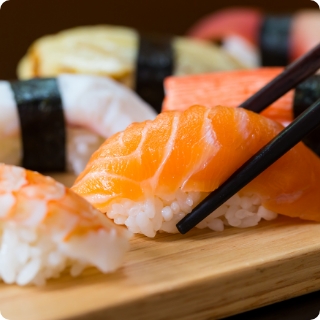
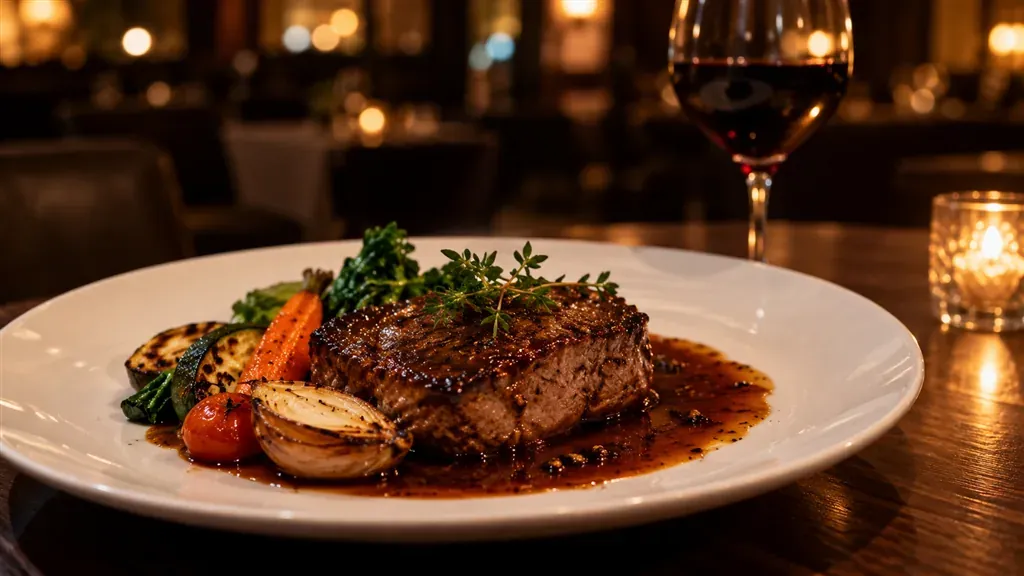
- Kyubey — sushi in its ninetieth year, almost all of it at counters: fourteen seats on the ground floor, fourteen at a sunken-hearth counter above, eleven at each of two counters in the annexe. Dinner is the ¥16,500 nigiri course or sushi kaiseki at ¥25,300, ¥30,800 and ¥44,000, with a 10 percent service charge added in the evening. Booking works online in English, Chinese and Korean, which is rare at this level. Cancelling on the day costs ¥10,000 per person.
- Ten-ichi — tempura on Namiki-dori from a house that started in Ningyocho in 1930 and came to Ginza in 1932, where it took up frying in front of the guest. Courses are ¥16,500, ¥22,000 and ¥27,500, tax included, plus a 15 percent service charge — the highest rate published by anywhere on this list. Cancelling on the day costs the whole course.
- Ginza Aster — Chinese cooking in Ginza 1-chome since 1926, a minute from Ginza-itchome Station, in courses named after orchids from ¥13,200 to ¥35,200 with a 10 percent service charge. The house dish is a steak of shark fin. A vegan menu is published separately, built with the techniques of Chinese temple cooking — worth knowing, because vegan options are thin in this part of town.
- Shiseido Parlour — the western restaurant on the fourth and fifth floors of the Shiseido building, with dish names printed in English. Courses are ¥8,500 to ¥15,000 and the old à la carte dishes stay: meat croquettes ¥3,100, beef stew ¥4,500, consommé ¥1,600. Tax is included and 10 percent service is added. One private room on the fifth floor, set with stained glass handed down through the house, seats eight.
- Hageten — tempura a minute from Exit C8, with set courses from ¥3,960 to ¥7,700 tax included. Two courses are bookable only at the counter: seven pieces at ¥6,600 or ten at ¥8,800, each with an appetiser and a drink. The main shop moved and reopened at this address in May 2026, so check you have the new one.
- Ushigoro — wagyu on the seventh floor of ONE GINZA, 90 seats including five fully private rooms for up to nine. Courses are ¥9,300 and ¥12,400 with a service charge on top; à la carte runs from ¥1,800 for thin-sliced tongue to ¥7,000 for chateaubriand, and the menu is printed in English cut by cut.
If you would rather not book, two places do not take reservations at all. Bairin, a basement tonkatsu shop that calls itself the first in Ginza, seats a group only once everyone has arrived; set meals are ¥1,950 to ¥4,600 and rice refills are free. Torigin, in a basement in 5-chome, grills chicken over binchotan and was, by its own account, the first shop in Ginza to put kamameshi on the regular menu; each rice pot is started after you order it and takes about fifteen minutes.
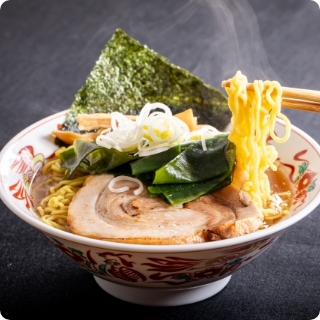
And if the budget has gone elsewhere, Tendon Ramen Hageten serves ramen topped with five pieces of tempura for ¥1,290, two minutes from the station, open 11:00 to 22:00 every day but New Year's Day. It takes cash only.
20:00 to 21:00 — last orders start falling
This is the hour that catches people out. Last orders in Ginza are early, and they are not the same as closing time.
- 20:00 — Bairin takes its last order and that is the end of it. Ginza Aster also stops at 20:00, or 19:30 on a Sunday or public holiday.
- 20:30 — Ten-ichi and Shiseido Parlour, both of which stay open an hour or so longer to let you finish.
- 21:00 — Tenkuni, the tendon house that opened in 1885, and Torigin and Hageten.
By 22:00 the doors are shut at Kyubey, Ten-ichi, Tenkuni, Hageten, Tendon Ramen Hageten and Torigin, and Bairin, Aster and Shiseido Parlour have been shut for a while. That is nine of the sixteen.
22:00 — what is left
Six places carry on, and they are easy to list.
- Bar S until 23:00, last orders 22:30, Tuesday to Saturday. Food stops at 21:45.
- Ushigoro until 23:30, last orders 22:30, every day of the year. A sit-down dinner booked for 21:00 is still possible here when it is not anywhere else above.
- Both branches of 300BAR until 23:30, and until 2:00 on Fridays, Saturdays and the night before a public holiday.
- Kushikatsu Tanaka until 1:00 from Tuesday to Saturday, and until midnight on Mondays and Sundays. Guests aged 20 or over pay a ¥319 cover charge, which brings a refillable plate of cabbage, and must order at least one drink. The skewers go into a shared pot of sauce and you may not dip twice.
- Bar High Five until 1:00, Monday to Saturday, with the last entry at midnight. The menu is written in English and leans Japanese: whisky with matcha bitters, gin with sakura liqueur, and a set of Japanese old classics.
Star Bar belongs on this list too — a basement bar in 1-chome known for its ice, three kinds of it kept apart, including a hand-cut block so clear it disappears in the glass. It takes a ¥1,100 cover charge per person. It does not publish its opening hours anywhere on its own site, so call before you go.
Around midnight — the decision, such as it is
The shops on this list give directions from six stations — Ginza, Ginza-itchome, Higashi-Ginza, Kyobashi, Yurakucho and Shimbashi — so check the last train for the line you are actually using, not for the area.
If you miss it, there is much less to fall back on here than elsewhere. At midnight on a Tuesday, Wednesday or Thursday, exactly two places on this list are open — Kushikatsu Tanaka and Bar High Five — and both close at 1:00. On a Friday or Saturday the two 300BAR branches make it four, and they run until 2:00. After 2:00, nothing on this list that publishes its hours is open.
Ginza does have a late trade of its own, in the hostess clubs that fill the upper floors of these buildings. This guide leaves them out because none of them publish what an evening costs, and a price you cannot check before you sit down is not one we are going to print.
If you want the night to keep going
Then pick a different area and come to Ginza for dinner another day. Roppongi has two kitchens still cooking at 8:00 and 9:00 the next morning. Shibuya and Shinjuku both run through the night at a lower price. For an evening that ends when the trains do, by design rather than by accident, see Asakusa, and for a gentler first night, Day 1 in Ueno.
Ginza rewards the other approach. Book one table, arrive at 18:30, and let the meal take three hours. The area was built for that, and it closes at 22:00 because it means it.
Every area in this guide
Ueno · Asakusa · Shibuya · Shinjuku · Roppongi · Ginza · Tsukiji · Tsukishima