





A Night in Tsukishima
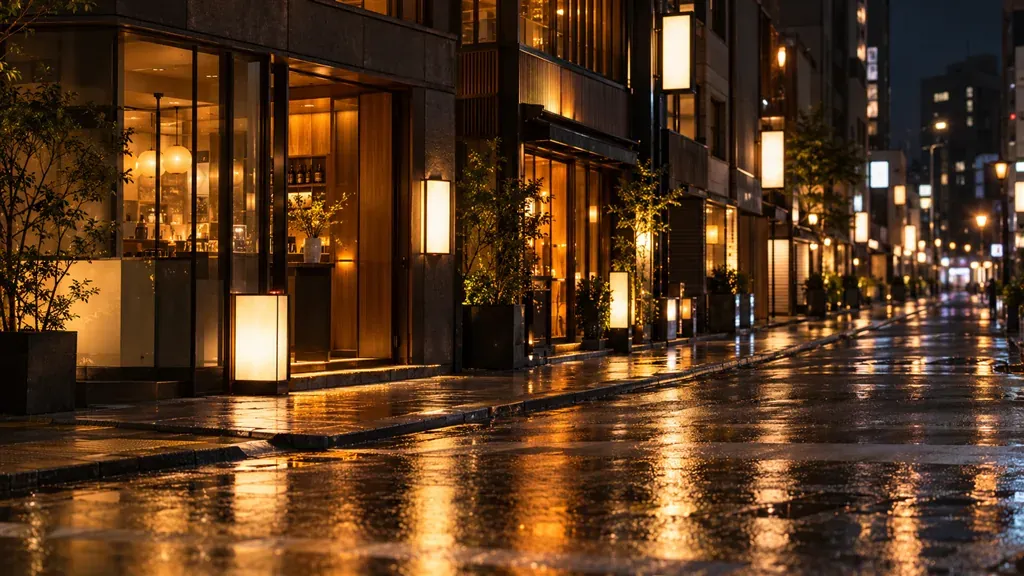
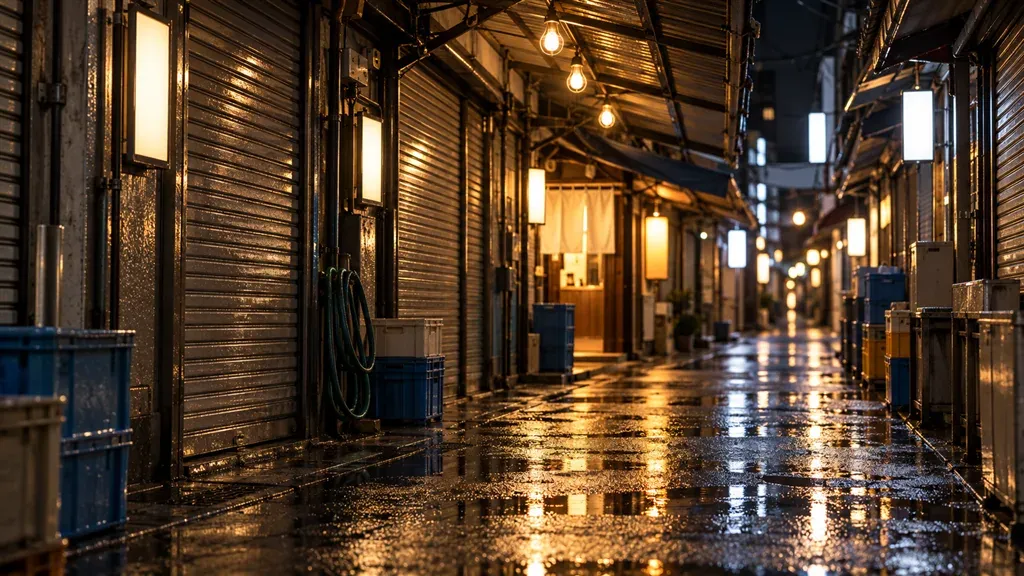
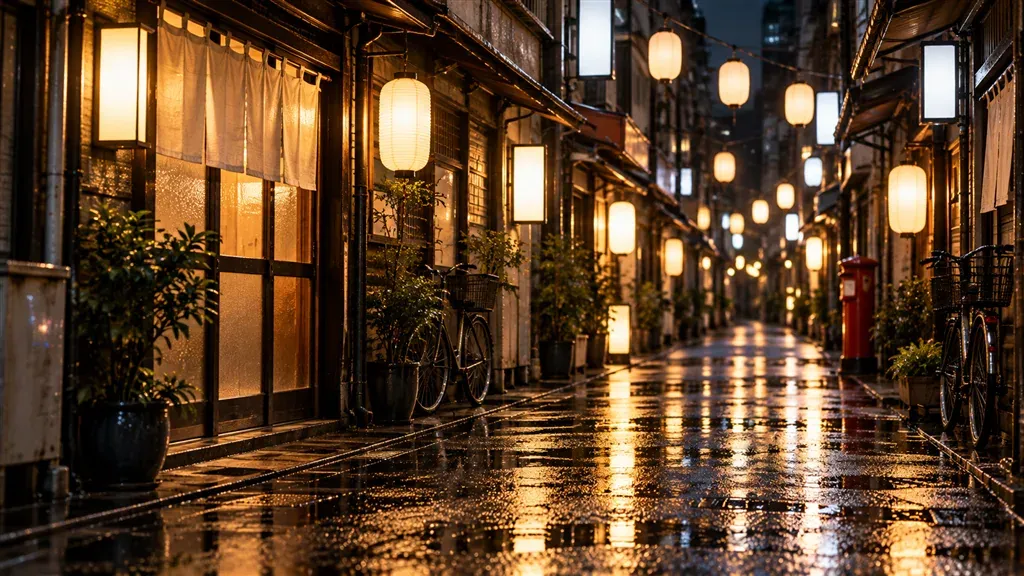
Tsukishima is one street, and for the most part one dish. The Tsukishima Monja Association has about fifty member shops along Nishinaka-dori shopping street — everyone calls it Monja Street — and the association says the entrance is right outside Exit 7 of Tsukishima Station. The street runs in four blocks, Ichiban-gai through Yonban-gai, and the association records which block every shop stands in.
Fifteen of the sixteen places on this page serve monja. The sixteenth is a bar.
If you have never eaten it: you do not have to cook it yourself. The association writes on its own site that first-time visitors often worry about this, and that the staff will do it for you. It also publishes the official five-step method, with a video and translations, and an English map of the street.
Two things apply before you pick anywhere. The association states that opening hours and closing days can change without notice. And Tsukishima is in Chuo ward, where smoking outdoors is banned everywhere except designated smoking areas, heated tobacco included, and smoking while walking is banned across the whole ward. No fine is set, but the ward says it will publish the names of people who ignore its guidance.
Which night you come
Six of the sixteen take a fixed day off, and they do not take the same one.
- Closed Mondays — Tsukushiya 18banchi, Kurumi and Tsuki no Yohaku, the bar.
- Closed Tuesdays — Tomo, Yoshimiya and Ebisuya. Yoshimiya also takes one further day off each month, on no fixed date.
- Irregular closing days — Oshio Makoto and Dagashiya publish no weekly day off but say the day varies.
The other eight publish no closing day at all: Hiro Honten, Tsukishima Monja Okonomiyaki Makoto, Monja Daruma, Oshio NST, Oshio Nagomi, Bambi 4, Monkichi Honten and Kondo Honten.
Ebisuya is worth reading twice. It serves lunch and dinner on most days, but on Wednesdays it opens once, from 17:00, and it is shut on Tuesdays.
From 11:00 — the ones that do not stop in the afternoon
Two places run straight through from late morning to closing, with no afternoon break:
- Oshio Nagomi — 11:00 to 23:00, 114 seats, tatami rooms, non-smoking with a smoking room.
- Monkichi Honten — 11:00 to 22:30, 82 seats, smoking allowed. It is the one shop here with English and Korean pages of its own.
Others open before noon and run on: Okonomiyaki Makoto from 11:30, Daruma from 11:30, Oshio Makoto and Oshio NST from 12:00.
On Saturday and Sunday the street starts earlier. Tomo and Bambi 4 open at 11:00 rather than 17:00 and 18:00, Tsukushiya at 11:15, Kondo Honten at 11:30, Oshio Makoto at 11:30, Oshio NST at 11:00, Dagashiya and Yoshimiya at 16:00, and Kurumi at 17:00.
16:30 to 18:00 — the rest open
- 16:30 — Tsukushiya 18banchi, Tuesday to Friday.
- 17:00 — Dagashiya, Tomo, Yoshimiya and Kondo Honten.
- 17:30 — Ebisuya, for its evening service.
- 18:00 — Hiro Honten, Bambi 4 and Kurumi.
Hiro Honten, Dagashiya and Kurumi do no lunch at all on weekdays. If you arrive in the afternoon expecting the whole street to be open, it is not.
21:00 — the first door shuts to new arrivals
Three places stop taking you well before they turn the lights off, and they publish the times.
- Yoshimiya — last entry 21:00, last orders 21:30, closes 22:00. It has five tables, takes bookings by phone only, and notes on its own page that the seats may feel tight for adults.
- Tsukushiya 18banchi — last orders 21:00, closes 22:00.
- Daruma — last orders 22:00 for food and 22:30 for drinks, closes 23:00.
Yoshimiya says it was founded in 1954 and calls itself the oldest monja shop on the street. Kondo Honten says it was founded in 1950. The two accounts do not agree, so take each as the shop's own claim.
22:00 and 23:00 — twelve of the sixteen finish
By 22:00, four are done: Yoshimiya, Kondo Honten, Tsukushiya and Ebisuya.
By 22:30, two more: Monkichi Honten and Kurumi.
By 23:00, six more: Daruma, Dagashiya, Tomo, Oshio NST, Oshio Nagomi and Bambi 4.
That leaves four doors open on the street after eleven.
After 23:00 — four, then three, then one
- Until 24:00 — Okonomiyaki Makoto. 54 seats, non-smoking, and the one shop here with private rooms.
- Until 00:30 — Oshio Makoto. 44 seats, non-smoking, cards and QR payments accepted.
- Until 01:00 — Tsuki no Yohaku, the bar. Closed Mondays, and see the gap below.
- Until 02:00 — Hiro Honten. On Tuesdays it closes at 00:30 instead.
So after midnight the street is three doors, and after one it is one.
How big the room is
The difference between the largest and smallest room here is a factor of six, and it decides what kind of evening you get.
- Large — Oshio NST 124 seats over two floors with tatami and sunken-hearth seating, Oshio Nagomi 114, Monkichi Honten 82.
- Middling — Tsukushiya 65, Bambi 4 and Kondo Honten 60 each, Okonomiyaki Makoto 54.
- Small — Hiro Honten and Dagashiya 28 each, Tomo 24, Kurumi 20, Tsuki no Yohaku 16, and Yoshimiya with five tables.
Bambi 4 publishes eleven tables for two and says it suits people eating alone. Daruma takes exclusive hire for parties of 30 to 44, and Tsukushiya on request. Kondo Honten needs two days' notice for its courses.
Smoking — five of the sixteen allow it
This matters more here than in most of Tokyo, because the rooms are small and the griddle is on your table.
Smoking allowed: Hiro Honten, Dagashiya, Oshio NST, Monkichi Honten and Ebisuya.
Oshio Nagomi is non-smoking but keeps a separate smoking room. The rest are non-smoking; Yoshimiya states plainly that it has no smoking seats. Tsuki no Yohaku does not publish a rule either way.
If you want something other than monja
There is one place, and it is not on Monja Street.
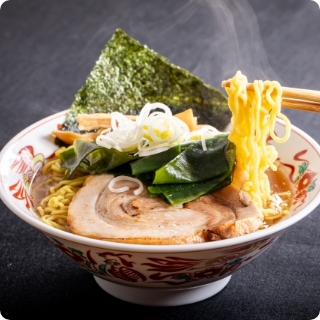
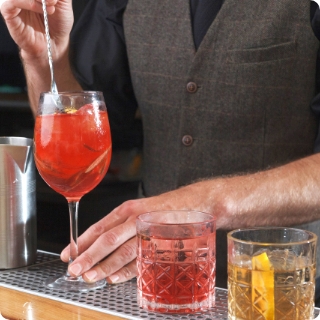
Tsuki no Yohaku is a bar on the second floor of a converted old house in a back lane, about two minutes from Exit 8a. It keeps whisky, wine and sake, and it serves ramen: the owner worked in a well-known ramen restaurant before opening here and makes both a thick iekei-style bowl and a clear shoyu one. Sixteen seats at a counter and tables, dogs welcome, cards accepted, and the bar gives an evening average of ¥4,000 to ¥4,999.
Two things to get right. It shuts between 20:00 and 21:00, so do not arrive in that hour. And it is closed on Mondays.
We looked for other evening places in Tsukishima with websites of their own and did not find any. Several izakaya and chain restaurants stand near the station, but none of them publishes its own hours, so they are not listed here.
Every area in this guide
Ueno · Asakusa · Shibuya · Shinjuku · Roppongi · Ginza · Tsukiji · Tsukishima
Common questions
Do I have to cook the monja myself?
No. The Tsukishima Monja Association writes on its own site that first-time visitors often worry about this, and that the staff will cook it for you. The association also publishes the official five-step method, with a video and translations, and an English map of the street.
How late does Monja Street serve?
Twelve of the sixteen places listed here are finished by 23:00. Four run on: Tsukishima Monja Okonomiyaki Makoto until 24:00, Oshio Makoto until 00:30, the bar Tsuki no Yohaku until 01:00, and Hiro Honten until 02:00. On Tuesdays Hiro Honten closes at 00:30 instead.
Which days are the shops closed?
Three close on Mondays: Tsukushiya 18banchi, Kurumi and Tsuki no Yohaku. Three close on Tuesdays: Tomo, Yoshimiya and Ebisuya, and Yoshimiya takes one further day off each month on no fixed date. Oshio Makoto and Dagashiya have irregular closing days. The other eight publish none. The association states that hours and closing days can change without notice.
Is there a last entry time?
Yoshimiya stops taking new arrivals at 21:00, with last orders at 21:30 and closing at 22:00. Tsukushiya 18banchi takes last orders at 21:00. Monja Daruma takes last orders at 22:00 for food and 22:30 for drinks.
Can you smoke in the monja shops?
Five of the sixteen allow it: Hiro Honten, Dagashiya, Oshio NST, Monkichi Honten and Ebisuya. Oshio Nagomi is non-smoking but keeps a separate smoking room. Outside, Chuo ward bans smoking on streets and in parks except at designated smoking areas, heated tobacco included, and bans smoking while walking across the whole ward.
Is there anywhere in Tsukishima that is not a monja shop?
One place on this site: Tsuki no Yohaku, a bar on the second floor of a converted old house about two minutes from Exit 8a. It keeps whisky, wine and sake and also serves ramen. It has sixteen seats, is closed on Mondays, and shuts between 20:00 and 21:00, so do not arrive in that hour.